It's interesting to me that Telltale's famous style of interactive storytelling is one that still continues to adapt. It's unexpected for something that ultimately boils down to a selection of A or B choices, but looking back to it's origin there's been so much innovation. The original Walking Dead game was the first to really put the genre on the map, introducing the infamous '(character) will remember that' popups and the episodic structure, which remain mainstays of the genre today. Outside of that, everything else has been shifted around, substituted or recontexualised in later iterations. A glaring issue with the concept when it first emerged was the fact that player choice has to be limited somewhere.
One example of this being becoming a problem happens in season 1 of The Walking Dead, where the player is tasked with choosing one of two characters to save from death by walkers. On paper this is good; it makes the player feel like they've had an impact, it allows them to inject their own opinions into how the narrative unfolds. The issue arises after the fact, where there is now two significantly different paths that the player could have taken. Developing the same game twice with a slight variation on what character is present is cumbersome, and it becomes an even bigger issue when another choice needs to be made. Players who chose option A now need to choose between options A1 and A2, B players B1 and B2. Choice being the central appeal of these games makes this kind of thing inevitable, so how can you avoid having the player on option A2B1A2 by the end of the game? The Walking Dead's answer was to unceremoniously kill whoever you chose to save on the side of the road a few hours later. This is not a good solution. But what else can you do? Each game inspired by Telltale's system attempts to answer this question, with each one making tweaks and adjustments in order to grant the player with the illusion of choice. AdHoc's DISPATCH is the latest in this long lineage of games, and provides my favorite answer so far: just put another game in there!!
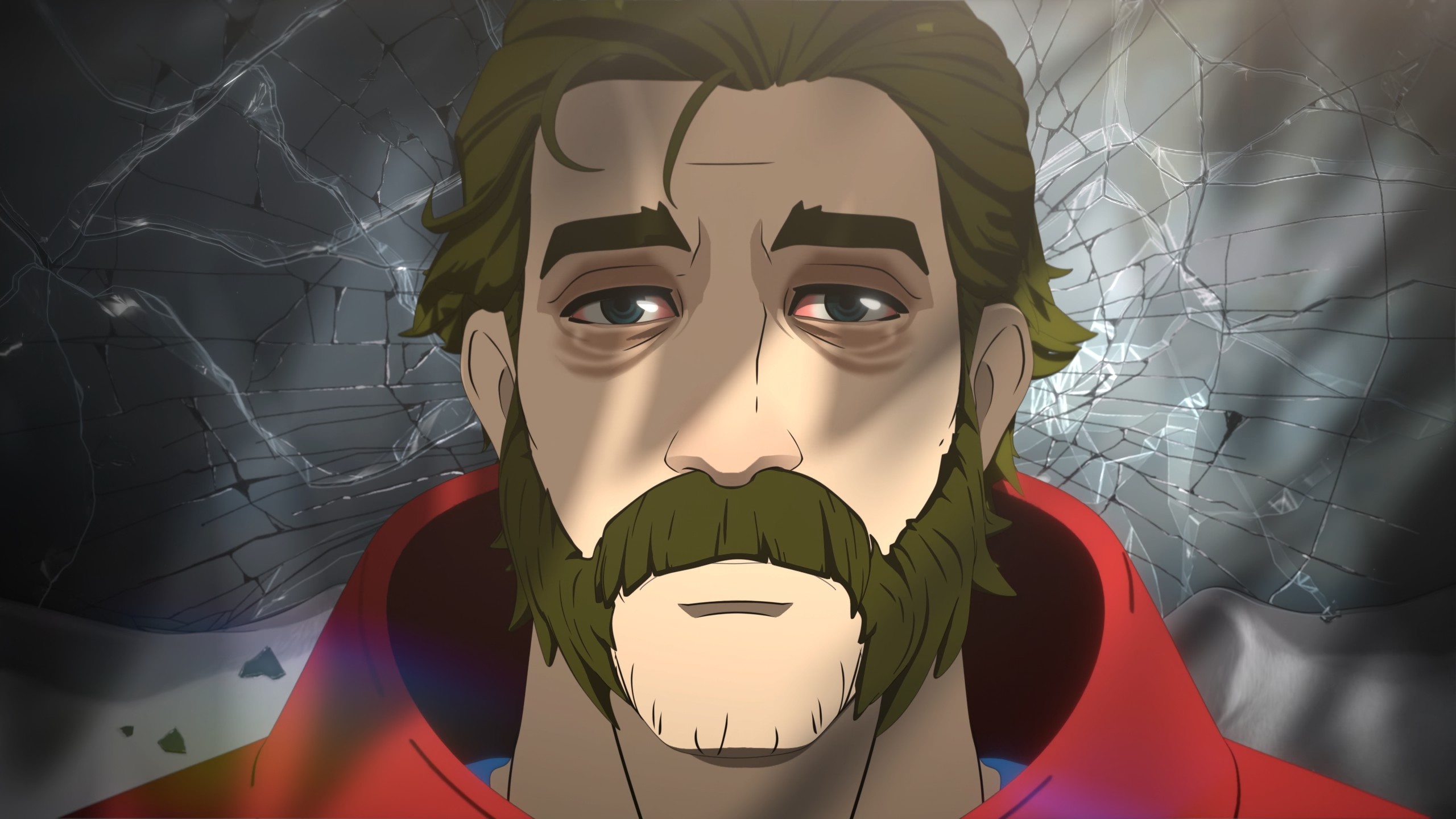
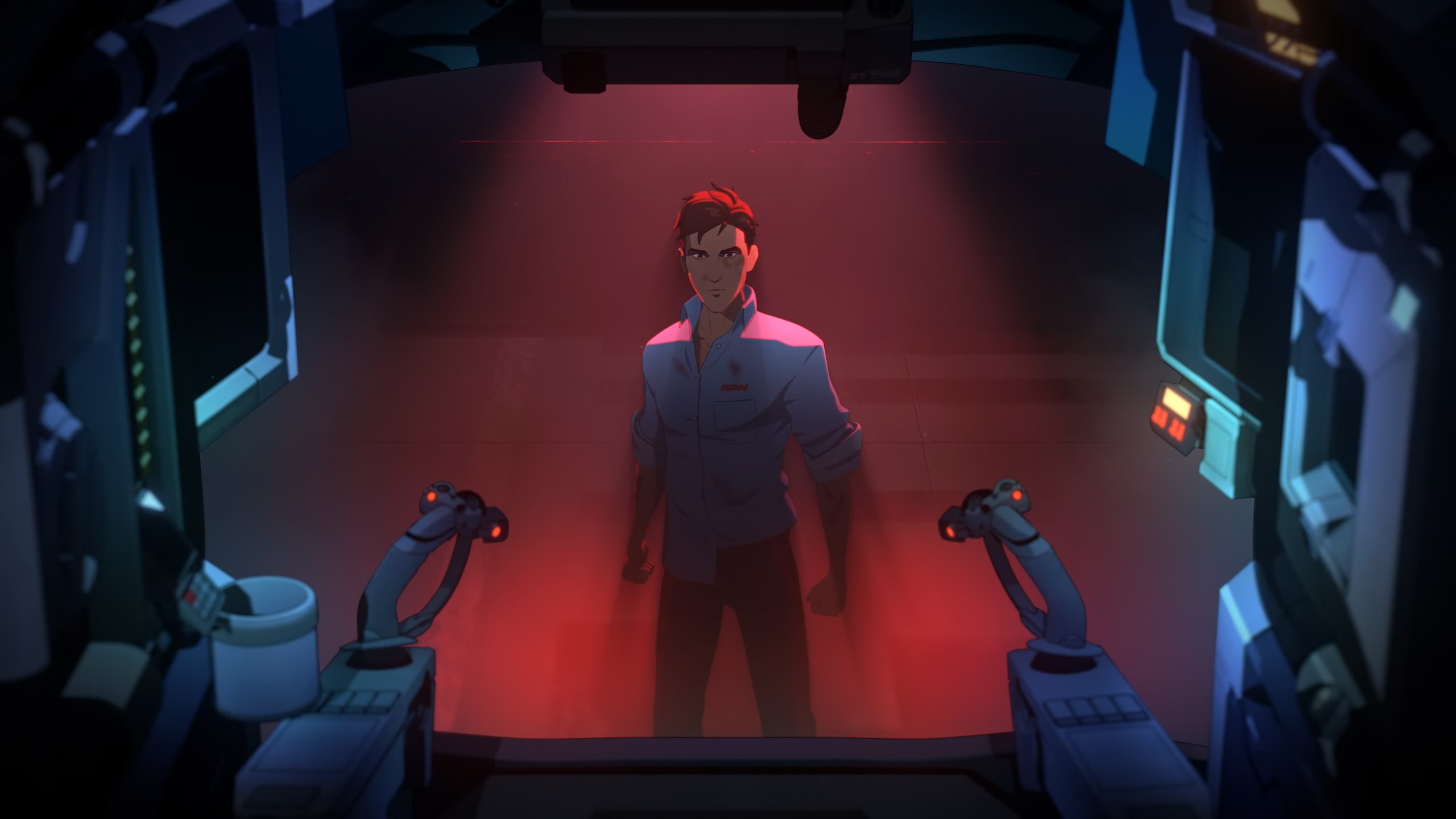
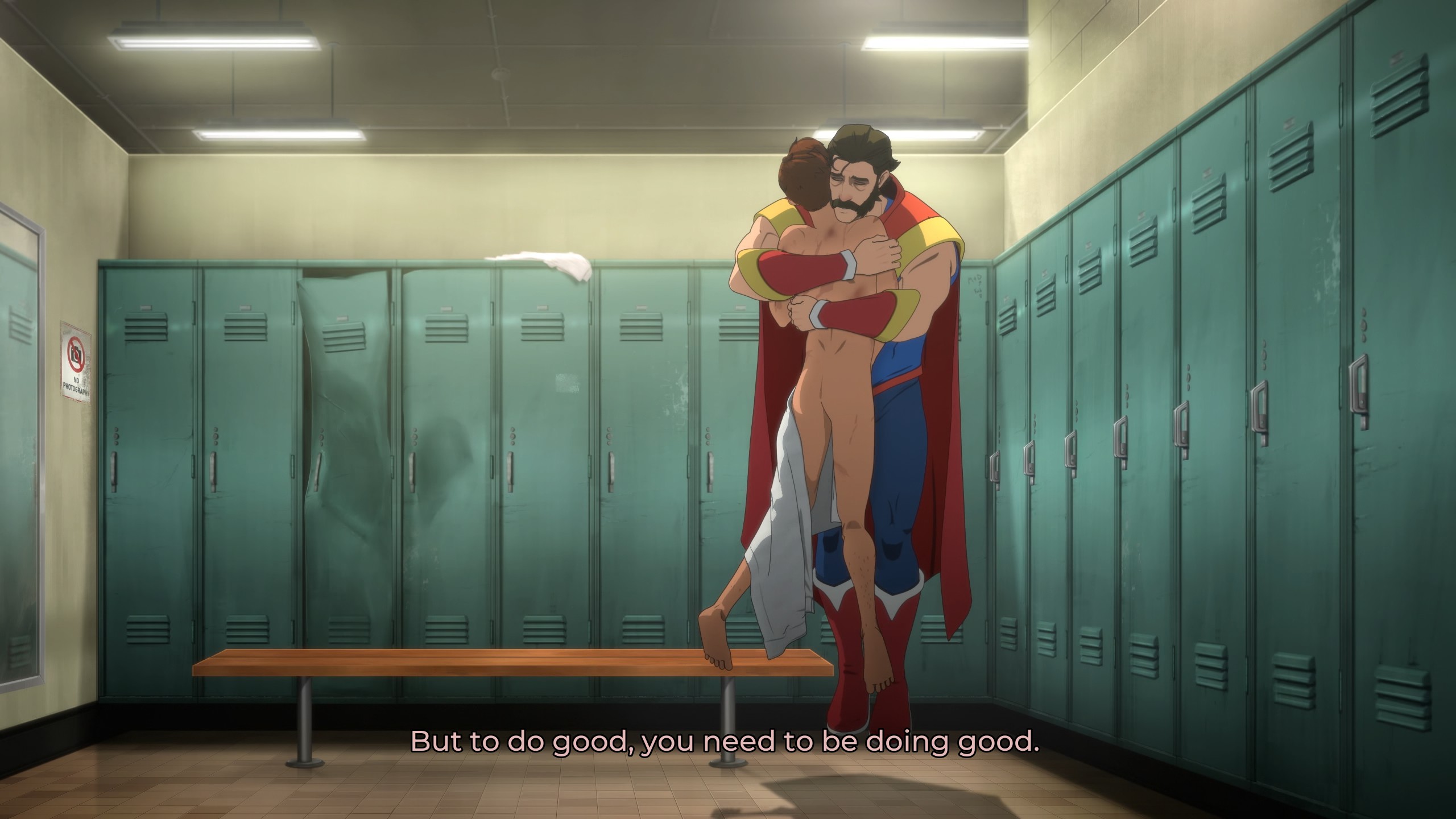
DISPATCH is a choice-based game, in the same lineage as The Walking Dead. It follows the story of Robert Robertson, a superhero who recently lost his mech suit, the sole thing that allowed him to actually be a hero. He's approached by a superhero dispatch team and takes a desk job directing a variety of heroes with different abilities to various crimes unfolding around the city. This is where DISPATCH majorly strays from its predecessors; tmhere is an entirely seperate game within the choice-based structure. About 50% of gameplay sequences will take place at work, with the player directing heroes to different locations depending on their ability. I haven't actually played 'This Is The Police' but i'm pretty sure this is similar to how gameplay operates in that. You're provided with a description of each crime, and must choose a hero to dispatch to it based on their stats. Some crimes will require you to chase a criminal, so you'll send someone with a high movement stat. Some require the criminals to be talked-down, so you'll send someone with a high charisma stat.
There was a high chance for a combination of mechanical systems like the one at play here to feel disjointed and frictional. I think that DISPATCH is able to avoid this entirely because player agency, like the choice based sequences, is also imbued into the dispatching sequences. The player is choosing each character to dispatch. They're choosing who to assign skill points to, who to send to hero-training class to unlock new abilities. It's like a series of micro-decisions that have minimal consequences outside of effecting your overall post-dispatch score. Narrative is also seamlessly incorporated into these sequences, with events that occur in the narrative impacting what happens in the gameplay. Early on, you're forced to choose one character from the roster to fire, and they won't be usable in the dispatch sequences anymore. You'll also annoy their friends, who then won't cooperate when you try to send them to a crime scene. The systems at play are interwined in such a way that it's hard to even notice the distinction between the two gameplay halves.
Of course, this doesn't act as the final answer to the great Telltale question, and isn't without it's flaws. One narrative sequence revolves around the leaderboard on the office floor, which ranks each hero based on how well they've been performing during field work. Whoevers at the bottom of the leaderboard is threatened with termination, and out of everyone on your team, Invisigirl is at the bottom. This didn't really make much sense for me, though. My most used hero at that point was Invisigirl by a wide margin, and she was multiple levels above everyone else on my team. This is a minimal issue, but it was a moment that pulled back the illusory curtain, exposing the set paths behind it. On the other hand, I previously mentioned that you're tasked with choosing between two characters to fire. Mechanically, it's a very similar situation to The Walking Dead's 'choose who to save from walkers' conundrum. Where The Walking Dead failed, Dispatch is instead able to flourish. Your choice DOES impact the rest of the game. Whoever you fire, they're gone. You don't see them again in narrative sequences, you don't see them in gameplay sequences.
I suspect that this was possible because the group of characters you interact with in DISPATCH is much larger than the group in The Walking Dead, and the entire game does not revolve around constant interaction with those characters. Instead of making two entirely different games, a variety of scenes just needed to be altered to include character A or character B. Choices you make after this one have no direct impact on your previous one, so the narrative paths can run as usual, with slight tweaks on how scenes unfold. I don't want to downplay the amount of work that must have gone into the inclusion of this choice, though. The character you choose to keep doesn't feel sidelined or less-present afterwards, and it makes for a great incentive to replay the game. And on top of this, you make another similar major choice shortly after! When you've chosen who to fire, you then need to choose who to hire. You're given two options, and the character you pick becomes a significant part of the narrative moving forward. It's crazy how much additional work must have gone into these two choices just to give the player a sense of impact on the narrative. Another great alteration that DISPATCH makes to the typical choice-based format is focusing alot of the impactful choices into one specific narrative zone.
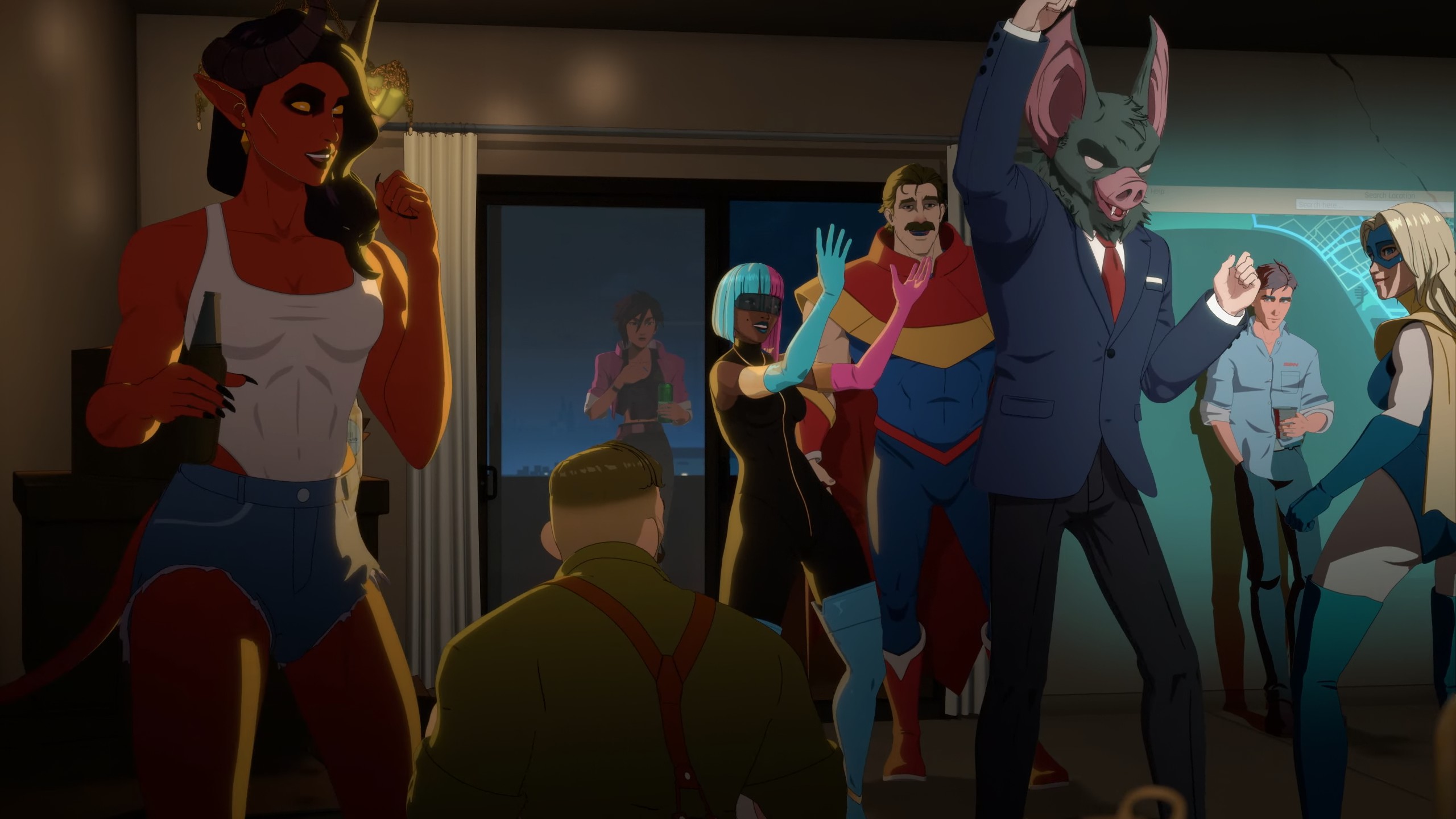
The narrative of DISPATCH isn't really that driven. I wouldn't say this is a bad thing though, because I really like when games focused on strong characters let you just exist around them for a long time. Robert's initial goal is to just wait until his mech suit has been rebuilt so he can be a hero again. While he's waiting, he's tasked with leading a problematic team of ex-villains on a path to being heroes. This is the group of characters you're dispatching in gameplay sequences. It's a big group of characters who are all really varied, so it takes until about episode 3 for you to learn more about them and actually start liking them. I think this lines up really well narratively because that's around the same point that Robert's relationship with them begins to deepen. Outside of this group, theres a variety of other characters who are really fun. I felt like every time a scene would change I was happy to see whoever was in it. I especially liked Roid and Flambae they r my faves
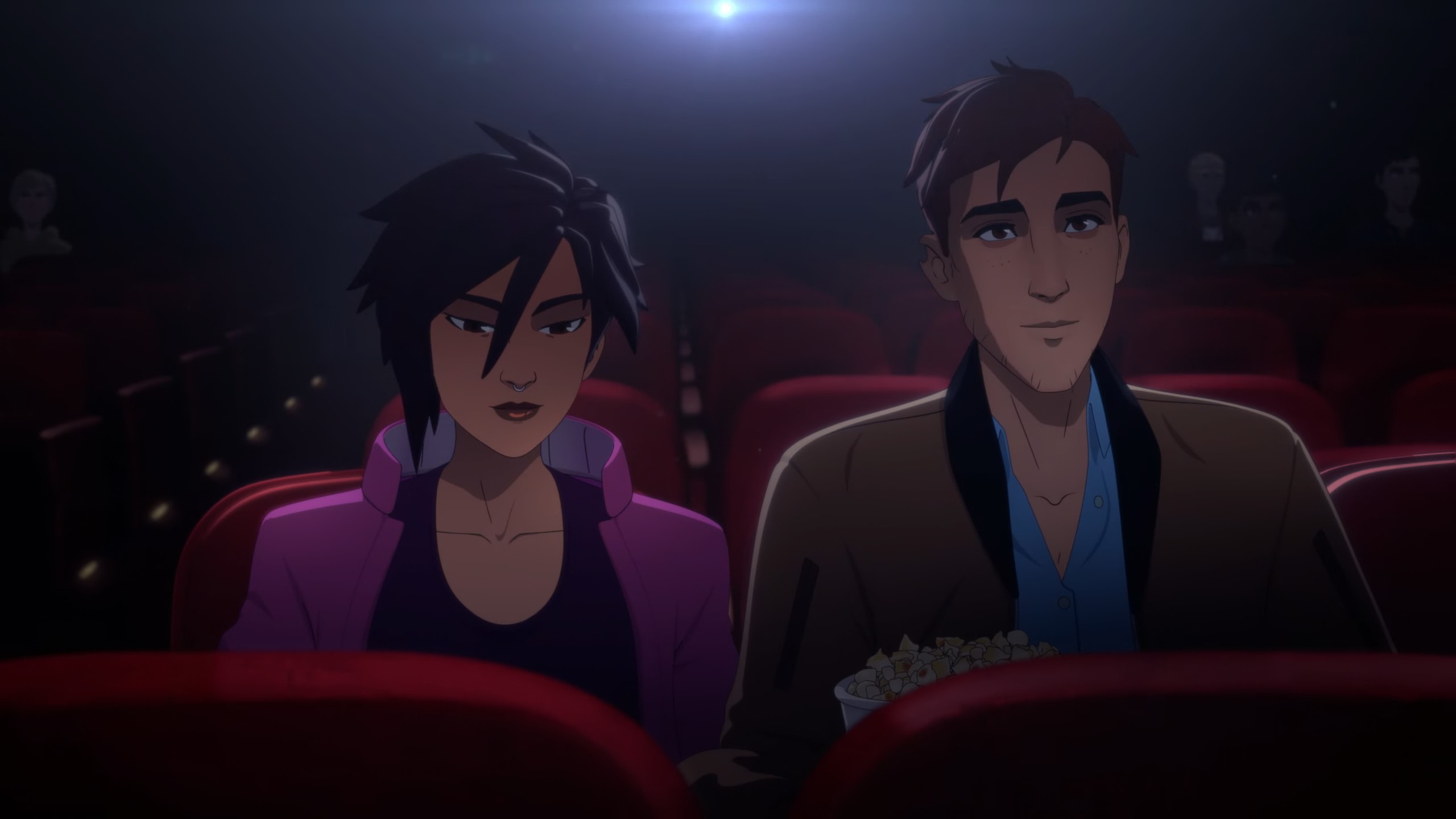
A large portion of the narrative (the specific zone all the choices are focused into i mentioned before) is centered on a choice-based romance. The way it unfolds is really nicely paced and it coincides with alot of narrative beats in a satisfying way. You can choose between Invisigal or Blonde Blazer (both women... where the flambae route at). I chose to go the Invisigal because its the correct choice. I think the way that one of the game's major choices is isolated to a completely seperate (but still important) narrative area really helps the choices feel impactful without being impossible to develop. Usually theres one path in a choice-based game that branches off, in DISPATCH it feels like there's multiple that run alongside eachother.
I've just been kind of rambling about how i think the choice based stuff is really good so far so im gonna remember to write what i thought of the game also. It's really good!! It's been a while since I've played a game with so many characters that im so fond of. I think the writing is able to toe the line of being cringe and being good sometimes but it never really stepped into cringe territory. It's a little corny sometimes but i liked those parts. I wasn't a fan of how many VAs weren't from a voice acting background at first (MoistCritikal, Jacksepticeye, Yung Gravy) but they're actually all pretty good!! I think Alanah Pearce could sound a tiny bit weird sometimes but it was never a problem. I was surprised at how much depth you can go into with the dispatching portion of the game, too. My final strategy was centered around sending specific heroes who had synergies with eachother to increase my chance of success and making sure that I always had one duo that was ready to go at any given time. My most broken build was centered around Flambae and Prism. You can make it so Prism makes a 1:1 duplicate of whichever hero is to her left on the deployment slots so I would send 2 Flambaes (I had his stats cranked up really high in all departments) and it would be a 100% success no matter what. The fact that every character is able to have multiple unique abilities to build around is super impressive. They all feel so different and i'm sure everyone comes up with their own equally broken strat.
I hope that DISPATCH acts as a mark in the history of choice-based games, and other developers are inspired by their intergration of an external gameplay system to deepen the interactivity of a genre infamous for its lack of it. I will be hoping and praying and begging for season 2 before 2030 they can delay that critical role game a little bit pleaseee please please please
(EDIT: I forgot to mention it but this feels so refreshing to play this in the current climate of superhero stuff. Everything is either Marvel or hyper violent fucked up and DISPATCH feels like it borrowed aspects from both and made its own thing)